Author Spencer Thorne
June 2, 2026

Drop The Neta is the latest crash-style release from Mirror Image Gaming, the studio behind the breakout hit Drop the Boss — and that lineage is the first thing worth understanding about it. Rather than a brand-new design, it is a regional variant built on the same descent mechanic that made Drop the Boss popular, reskinned with a different political caricature for a new audience (“neta” is the Hindi and Urdu word for a politician). That heritage is a genuine selling point, since the mechanic is proven rather than experimental. It also explains a quieter problem: the RTP you will see quoted for Drop The Neta almost everywhere online — usually 96 percent — was never actually published for this title. It belongs to Drop the Boss, the game it was reskinned from. Reviewers borrow the sibling’s number and present it as fact, which means nobody quoting it has verified the return on the game they are describing. This piece does the opposite: it states clearly what is documented for this specific title, what is not, and what that gap means for the money you put through the game.

| Detail | Information |
|---|---|
| Developer / provider | Mirror Image Gaming |
| Game type | Crash-style “burst” game (physics-based descent) |
| RTP | 96.00% (source: provider listing for the Drop series) |
| House edge | 4.00% |
| Max multiplier | 5,000x (the developer’s Drop-series cap; not separately published for Drop The Neta) |
| Min stake | Not separately disclosed (sibling title starts at $0.10) |
| Max stake | Not separately disclosed (sibling sources cite up to ~$500) |
| Risk level settings | No fixed risk tiers; in-round event modifiers and an optional ante in the Drop series |
| Provably fair | Yes — via the host platform’s Stake Engine (HMAC-SHA256) |
| Auto-cashout | Not separately documented; the core loop relies on a manual cash-out during descent |
| Demo available | Yes — free-play mode offered on the host platform |
| Mobile compatible | Yes |
Drop The Neta is a crash-style game made by Mirror Image Gaming, a studio that describes itself as a burst-game specialist and is generally credited with originating the “Drop Mechanic” that several of its titles now share. The game appears in the burst-games and new-release sections of the Stake platform, where it sits alongside near-identical stablemates such as Drop the Boss and Drop the Don. “Neta” is the Hindi and Urdu word for a politician or leader, which tells you what the reskin is: the same descent mechanic Mirror Image built for Drop the Boss, dressed in political caricature aimed at a different regional audience. Mechanically, it is not a slot in the traditional sense — there are no reels and no paylines — even though some listings file it under “slots.”
What happens in a round is straightforward. You set a stake, a caricatured figure is launched and begins falling through a vertical field of clouds, obstacles and landing zones, and a multiplier accumulates as the descent continues. The longer the figure stays in play, the higher the potential return climbs — but the descent can be ended abruptly by a fatal obstacle, at which point the stake is lost. The headline prize across the Drop series is a flat 5,000x payout for reaching the top landing zone, an outcome the game is deliberately built to make rare. None of this is unique to Drop The Neta; it is the house mechanic with a new skin, sharing the same 96 percent RTP and 4 percent edge as the rest of the Drop series. Expecting a mechanically fresh experience from “the new one” is the misread to avoid — what is new here is the theme, not the maths.
Because Drop The Neta is a reskin, the most honest way to understand it is to set it directly against the title it came from. The two games share the engine, the descent loop, the fatal-obstacle bust, the in-round event modifiers, the 5,000x top-zone prize and the same 96 percent RTP with a 4 percent house edge; what changes is the surface. Drop the Boss is themed around a caricatured US president falling from a replica of Air Force One toward a White House landing zone, and it is the more heavily documented of the two — affiliate pages put a stake range and full feature set on the record for it. Drop The Neta swaps the theme for a regional political figure aimed at a South Asian audience and inherits the mechanic wholesale. The one area where Drop The Neta remains thin is its own published spec sheet — exact stake limits and the precise cash-out implementation for this title are less clearly laid out than for the sibling — but on the numbers that decide what the game costs you, the two are the same machine.
| Feature | Drop the Boss | Drop The Neta |
|---|---|---|
| Developer | Mirror Image Gaming | Mirror Image Gaming |
| Core mechanic | Physics-based descent / crash | Identical descent / crash |
| Theme | US-president caricature, Air Force One | Regional “neta” (politician) caricature |
| RTP | 96% (affiliates also cite up to 96.75%) | 96% (same Drop-series figure) |
| House edge | 4% | 4% |
| Max multiplier | 5,000x (top landing zone) | 5,000x (same Drop-series cap) |
| Stake range | Cited from $0.10 up to ~$500 | Not separately published |
| Provably fair | Yes — Stake Engine (HMAC-SHA256) | Yes — same infrastructure |
| Documentation | More fully documented | Inherits the sibling’s spec |
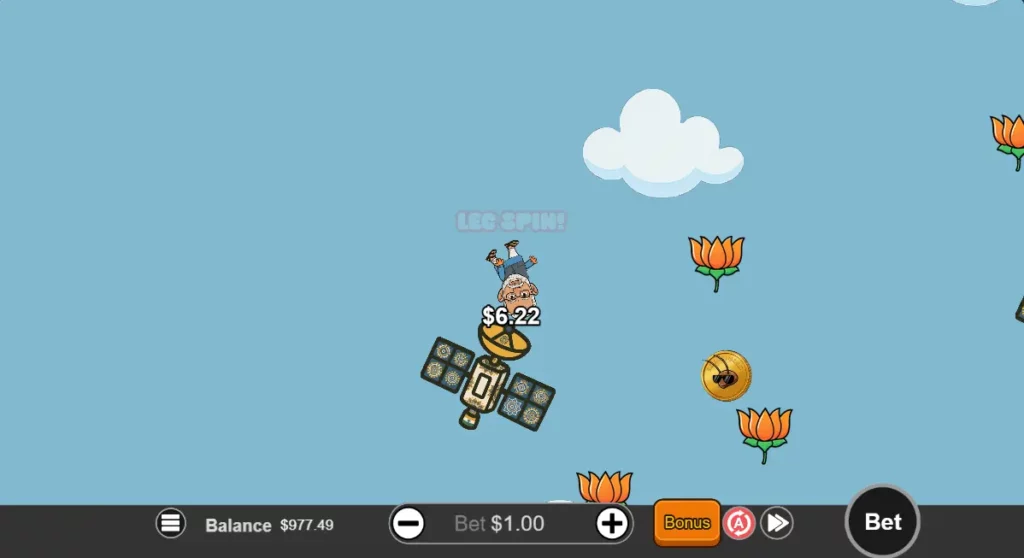
A round begins when you commit a stake and trigger the drop. From that moment the outcome is already determined by the platform’s random number generation — the descent you watch is a visualisation of a result that has been fixed, not a live physics simulation whose ending is still in doubt. This matters, because the animation can feel like a game of timing and reflexes when in fact the crash point was set the instant you placed the bet. As the figure falls, a running multiplier builds, and certain mid-descent events modify it: some boost the figure through to higher zones, while others — in the sibling titles, “assault clouds” are the documented example — cut the accumulated win, and a fatal event such as an obstacle strike ends the run on the spot and forfeits the stake.
The player’s only real decision is when to take the money. In a conventional crash game you either cash out manually before the bust or set an auto-cashout multiplier that the system executes for you. Drop The Neta’s exact cash-out implementation is not separately documented, and the affiliate descriptions of its sibling are inconsistent — some describe a manual cash-out during the fall, others describe simply riding the figure to whatever landing zone it reaches. The honest position is that the core loop centres on a manual decision to bank the current multiplier before the descent ends badly, and that a numeric auto-cashout field for this specific title could not be confirmed. The game does not appear to offer the kind of preset risk tiers some crash titles use, where you trade higher bust probability for a fatter multiplier curve. Instead, variance is shaped by the in-round events and, in the Drop series, by an optional ante or bonus-style purchase that changes how the descent plays out. The critical point about any such add-on is below, in the mathematics: paying extra to alter the descent rearranges the variance, it does not improve the underlying return.
Here is the figure stated plainly: Drop The Neta carries a 96 percent RTP and a 4 percent house edge, the same return the Drop series is listed at. In practical terms that means the operator retains roughly $4 of every $100 wagered over a large number of rounds, and you keep the other $96 — on average, across the long run, not within any single session. That 4 percent edge is lower than many casino formats charge, which is a genuine point in the game’s favour, but “below average” is not “in your favour”: the edge still points one way, and the only real question is how fast it works on your bankroll.
That speed is what the expected-loss formula makes concrete: expected loss per hour equals house edge multiplied by rounds per hour multiplied by average stake. Crash-style games typically run somewhere between 50 and 100 rounds per hour; a physics-descent game tends toward the slower end, so assume 60 rounds per hour. At the game’s 4 percent edge, a player betting $1 a round faces an expected loss of about $2.40 an hour ($0.04 × 60 × $1), and a player betting $5 a round faces about $12 an hour ($0.04 × 60 × $5). Push the pace to 100 rounds an hour and those figures rise to roughly $4 and $20. Raise the average stake to $20 a round at 60 rounds an hour and the expected cost is about $48 an hour. None of these are worst-case numbers or bad luck — they are the average price of an hour at the table, the amount the 4 percent edge is designed to take regardless of how the individual rounds fall. A lucky session beats them and an unlucky one is worse, but over enough hours the arithmetic wins.
Volatility is the other half of the picture, and it is what makes the unfavourable mathematics easy to ignore in the moment. A game built around a rare 5,000x top prize concentrates a large share of its theoretical return into outcomes most players will never hit, which means the typical session is funded out of the many losing rounds in between. That structure produces real upswings — you can be comfortably ahead after twenty minutes — without changing the long-run expectation one bit. Being up in a session is variance doing what variance does; it is not evidence that the edge has tilted in your favour. And the optional ante or feature-buy mechanics common to the Drop series do not rescue the maths: spending more to skip a fatal event or guarantee a better descent shifts where your money goes and how lumpy the results feel, but it is paid for inside the same return model. You are buying a different distribution of the same expected loss, not a smaller one.
Drop The Neta runs on the Stake platform’s provably-fair infrastructure, the Stake Engine, and that system is genuinely verifiable rather than a marketing slogan — so it is worth explaining exactly how a player would check a result, because a fairness claim you cannot operate is no protection at all. The system uses the cryptographic hash function HMAC-SHA256 and three inputs per bet: a server seed generated by the platform, a client seed that belongs to and can be edited by the player, and a nonce that increments with each bet. Before you play, the platform commits to its server seed by publishing the SHA-256 hash of it — a one-way fingerprint that cannot be reverse-engineered into the seed itself. Because the operator is locked into that hashed seed before it ever sees your bets, and because your client seed feeds into the result, neither side can steer an individual outcome after the fact.
To actually verify, you go into the platform’s fairness settings and rotate your seed pair, which reveals the previously hidden, unhashed server seed and replaces it with a new one. You can then confirm that the revealed seed hashes back to the fingerprint that was published earlier, and you can re-compute any bet made under that seed by running the server seed, your client seed and the nonce through the same HMAC-SHA256 process the platform uses. Independent, browser-based verifiers exist for exactly this — they run the calculation locally so your seeds are never transmitted anywhere — and Stake Engine titles publish a fixed outcome table when they launch, which is what makes each result reproducible after the fact. The honest distinction worth keeping in mind is between two different guarantees: provably fair confirms that the result you received matches the committed seeds and was not altered round by round, while the 96 percent RTP is a statistical property of the game that plays out over thousands of rounds. The first you can check yourself in seconds; the second you take on the strength of the published figure and the long-run behaviour of the outcome table. Together they are more than most crash games offer, but they answer different questions and neither replaces the other.
The clearest strength is the verification layer. Running on the Stake Engine means every result can be reproduced from the seeds, and that is not something to wave away — a player who learns the rotate-and-recompute process can confirm that no individual round was tampered with, which is genuine reassurance the average crash clone cannot provide. Mirror Image is, by reputation in this niche, the originator of the drop mechanic the game uses, so the core loop is a mature design rather than a first attempt, and the descent format gives the player a clearer, more legible sense of “how close did I get” than a bare ascending number does.
The presentation does its job. The political-caricature theme is the entire reason variants like this exist, and for the audience it targets, that hook lands more naturally than a generic rocket or plane. The game is built for the platform’s mobile-first environment and offers a free-play demo, which is the single best feature for a cautious player — you can learn the timing, the events and the feel of the descent without staking anything, and that demo is the right place to start. With a 96 percent RTP and a low entry stake, the format stays accessible to small-budget players rather than being gated to high rollers.
The most fundamental weakness is the one no crash game can design away: the 4 percent house edge means the game is mathematically built to take money from players over time, and the faster pace of the format lets it do so more quickly than slower casino games. That is not a defect unique to Drop The Neta, but it is the honest baseline any prospective player should hold in view, especially against the pull of the 5,000x headline.
Several of the game’s other limitations follow from what it is. It is a reskin — the same drop mechanic Mirror Image has shipped under multiple themes — so anyone expecting a mechanically distinct experience from “the new one” is buying a new coat of paint on a familiar engine. The game’s own published spec sheet is thinner than the sibling’s: exact stake limits and the precise cash-out implementation for this title are less clearly documented than for Drop the Boss, so a player has to lean on the sibling’s pages to fill the gaps. There is also very little independent player track record for Drop The Neta specifically; it is new and niche, and the community discussion that does exist clusters around the platform in general rather than this game, including the usual scattered and unverified “rigged” complaints that attach to almost any casino brand and which the provably-fair system is precisely designed to let you test for yourself. And the high volatility is a double-edged feature: the same structure that makes a 5,000x hit possible is what produces long, grinding stretches of losing rounds in between, which is hard on a small bankroll and harder on an impatient one.
The player who will get the most from Drop The Neta is someone who treats it as paid entertainment, not as a return-on-investment exercise. If you enjoy the descent format and the satirical theme, you are comfortable with high-volatility swings, and you actually use the provably-fair tools to confirm your results, the game gives you a legible loop, a verifiable one, and a reasonable 4 percent edge. The bankroll approach that suits this profile is small, fixed and pre-decided: a session budget you would be content to lose entirely, spread across low stakes, with the demo used first to learn the feel for free.
The player who should look elsewhere is the one chasing the highest possible return per dollar. A 4 percent edge is reasonable, but it is not the best on the market — some games, particularly certain low-edge table games and a few crash titles, return more to the player. If squeezing the longest expected playtime out of a fixed bankroll is your priority, you can do slightly better than 4 percent, and you would want to compare the disclosed RTP and volatility of a few alternatives before settling here.
The player who should avoid it entirely is anyone drawn in chiefly by the 5,000x headline. That prize is engineered to be rare, the variance that surrounds it is exactly what empties a bankroll between the dreamed-of hits, and chasing it with rising stakes after a cold run is the precise behaviour the game’s structure punishes hardest. If the top multiplier is the reason you are tempted, that is the reason to step away.
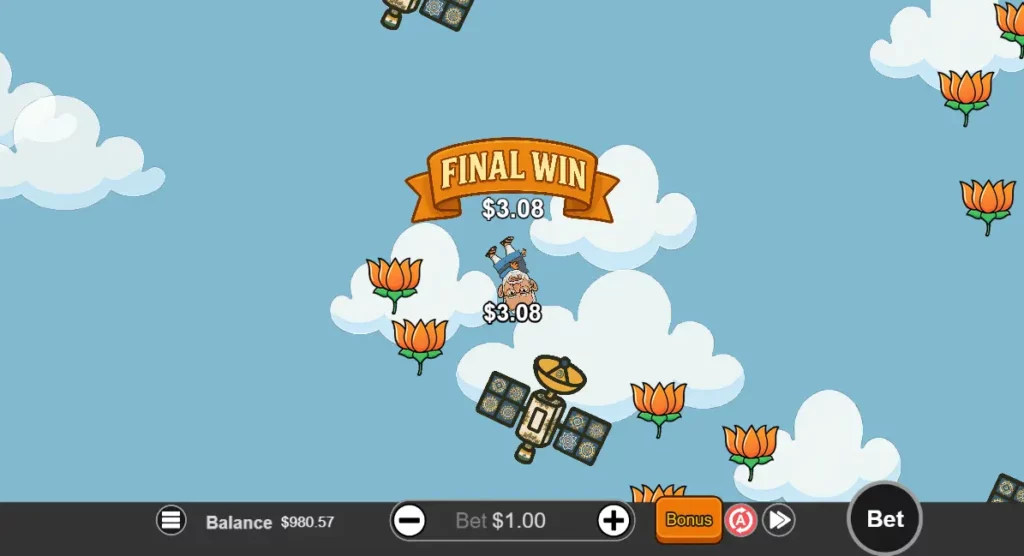
Drop The Neta is a competently built, fully verifiable crash game from a studio that already knows how to make this exact mechanic, and on the numbers that matter it is a fair-to-middling proposition: a 96 percent RTP and a 4 percent house edge, wrapped in high volatility and a 5,000x ceiling. The strongest reason to play it is the combination of a proven loop, a reasonable edge for the format, and a provably-fair layer that lets you confirm no round was rigged — more than most of the genre offers. The most important reason for caution is the volatility: the same structure that dangles the 5,000x prize is what drains a bankroll through the long losing stretches between rare hits, and the fast pace lets the 4 percent edge compound quickly. This game is right for the player who wants verifiable entertainment at small, fixed stakes and treats the cost as the price of play; it is wrong for anyone chasing the top multiplier with rising bets. The recommendation is therefore qualified: worth playing with the demo first, a hard loss limit set in advance, and no illusion that the edge can be beaten over time. The one fact most reviews of this game never mention is the simplest and most important: the descent that looks like a test of nerve is already decided the instant you bet — your only genuine choice is when to cash out, not whether the round goes your way.
The RTP is 96 percent, in line with the rest of Mirror Image Gaming’s Drop series. That means the game returns about $96 of every $100 wagered to players on average over the long run, with the remaining 4 percent retained as the house edge.
Yes. It runs on the Stake platform’s provably-fair system, which uses HMAC-SHA256 with a committed server seed, a player-controlled client seed and a nonce, letting you re-compute and confirm any result after rotating your seeds.
The Drop series the game belongs to caps at a 5,000x top multiplier, awarded for reaching the highest landing zone, though that figure has not been separately published for Drop The Neta specifically.
You place a stake and a caricatured figure begins a descent during which a multiplier builds; you bank your winnings by cashing out before a fatal obstacle ends the run, with the outcome fixed by the platform’s RNG the moment you bet.
The house edge is 4 percent, the mathematical complement of its 96 percent RTP. On a $5 average stake at roughly 60 rounds an hour, that works out to an expected cost of about $12 an hour over the long run.
There is no evidence it is, and the provably-fair system lets you verify each individual round yourself rather than take it on trust — rotate your seeds, then recompute any result from the server seed, client seed and nonce. That checks a round was not altered; the 96 percent RTP is the separate, long-run figure that governs returns across many rounds.