Author Spencer Thorne
October 8, 2026

High Flyer is a multiplayer plane crash game from Pragmatic Play, released in September 2024, in which players cash out before the aircraft flies away. It publishes a 97% RTP, offers two independent bet spots with auto-cashout and advertises multipliers of up to 1,000,000x.
High Flyer is marketed on a maximum multiplier of 1,000,000x, yet operator documentation for the game lists a maximum win of 250,000 in the bet currency. Where that cap applies, the full 1,000,000x can only be paid on a stake of $0.25 or less. At the $100 maximum bet, the effective ceiling falls to 2,500x, far below the figure used to promote the High Flyer casino game.
| Detail | Information |
|---|---|
| Developer / provider | Pragmatic Play |
| Game type | Crash |
| RTP | 97.00% (source: Pragmatic Play official game page) |
| House edge | 3.00% |
| Max multiplier | 1,000,000x (250,000 win cap per operator documentation) |
| Min stake | $0.10 per bet spot |
| Max stake | $100 per bet spot ($200 per round with both spots) |
| Risk level settings | No |
| Provably fair | No |
| Auto-cashout | Yes |
| Demo available | Yes |
| Mobile compatible | Yes |
The High Flyer game is a multiplayer crash game. Every player at the table bets on the same shared round, a small aircraft takes off, and a multiplier starting at 1.00x climbs while the plane is in the air. A player who cashes out before the plane flies away is paid the stake multiplied by the value on screen at that moment. A player who is still in when the plane leaves loses the stake. There are no reels, symbols or paylines, and the only decision in each round is when to leave.
Pragmatic Play released High Flyer on 19 September 2024 as the third title in its crash range, after Spaceman and Big Bass Crash. The airplane theme and the dual bet layout place it in direct competition with Spribe’s Aviator, and in practice it works as a close like-for-like alternative. The crash games and casino mini-games section covers other titles built on the same format.
Each round opens with a betting window during which players place or cancel stakes on one or both of the two bet spots. Operator help pages describe a “Bets Closed” message that marks the end of this window, after which no stake can be changed. Pragmatic Play states that there are only around five seconds between flights.
The crash point is determined by Pragmatic Play’s random number generator, not by player behaviour, the size of bets on the table or the length of previous rounds. Once the plane takes off, the multiplier rises continuously and the plane flies off at the predetermined point. That moment is shown on screen as the plane leaving and the multiplier freezing, and any stake still in play at that instant is lost. A round can also end at 1.00x, in which case every bet placed in that round loses before any cash-out is possible.
Both bet spots are independent. Each has its own stake, its own autoplay and its own auto-cashout value, so a player can set one spot to leave early and let the other run longer. Auto-cashout takes the player out automatically if the multiplier reaches the chosen value, and a manual cash-out at a lower multiplier remains available while it is active. Operator help pages give the auto-cashout range as 1.01x to 100x, and operator documentation limits autoplay to 100 rounds per run. The practical consequence is that any multiplier above 100x can only be captured by pressing the button by hand, so the very large outcomes the game advertises are outside the reach of automated play.
High Flyer has no risk level settings. There is no difficulty selector, no alternative multiplier curve and no partial cash-out feature of the kind Spaceman offers. The only levers a player controls are stake size, cash-out target and whether to use one bet spot or two.
Pragmatic Play lists the RTP of High Flyer at 97.00% on its official game page, which gives a house edge of 3%. Over a large number of rounds, the house retains approximately $3 of every $100 wagered, regardless of how the player times cash-outs. Unlike Spaceman, which Pragmatic offers in several RTP configurations, High Flyer is published as a single figure.
The expected cost of an hour of play follows a simple formula: expected loss per hour equals the house edge multiplied by rounds per hour multiplied by the average stake per round. For this calculation, assume 80 rounds per hour on a single bet spot, which reflects a player who sits out some rounds. At a $1 stake, the expected loss is 0.03 × 80 × $1, or $2.40 per hour from $80 wagered. At a $10 stake, it is 0.03 × 80 × $10, or $24 per hour from $800 wagered. Using both bet spots at $10 each doubles this to $48 per hour. Because rounds are only seconds apart, a player who bets every single round can exceed 80 rounds per hour comfortably, and the cost rises in direct proportion.
If the 97% return applies evenly across cash-out targets, as it does in conventional crash designs, the chance of reaching a given multiplier is roughly 0.97 divided by that multiplier. A 1.5x target succeeds about 64.7% of the time, a 2x target about 48.5%, a 10x target about 9.7% and a 100x target less than 1%. Pragmatic Play has not published its full crash-point distribution, so these figures describe the standard model rather than a confirmed specification, but the principle holds either way: choosing a higher target lowers the probability of being paid by the same proportion that it raises the payout.
This is why session results feel so different from the 3% edge. A player aiming for 2x has roughly a 3.6% chance of losing five rounds in a row on any given run, which will happen several times across an hour. A player aiming for 10x has about a 13% chance of going 20 rounds without a single win. Equally, one 10x hit early in a session can leave a player well ahead for a while. Short sessions are dominated by variance, while long sessions converge towards a loss of around 3% of everything staked. The two bet spots redistribute that variance between a safer and a riskier position, but each spot carries the same edge.
High Flyer is not provably fair. Pragmatic Play does not publish a server seed, a client seed, a hash of the upcoming result or any per-round verification tool for this game. Outcomes come from a certified random number generator that is tested statistically by independent laboratories as part of Pragmatic’s licensing obligations.
In a genuinely provably fair crash game, the operator commits to a hashed server seed before the round, combines it with a client seed that the player can influence, and reveals the original seed afterwards. The player can then hash it, typically with SHA-256, and confirm that the published crash point was fixed in advance and not altered. None of that is possible with High Flyer. A player cannot check whether any individual round was determined fairly and has to rely on the integrity of the testing regime and of the licensed operator.
Pragmatic Play’s own materials for High Flyer describe no seed system, hash or verification page, so a claim that the game is provably fair has no support in the developer’s documentation. Certified RNG is a legitimate fairness model in regulated markets, but it is a different thing from player-verifiable fairness, and the two should not be confused.
The 97% RTP is the strongest point in High Flyer’s favour. It is published by the developer as a single figure, it matches Aviator, and it is better than the configurations Pragmatic offers on Spaceman.
The dual bet layout is useful in practice. Two independent spots with separate auto-cashout values let a player split one stake into a low-target position and a high-target position, which smooths the swings of a session without pretending to change the expected result.
The statistics panel is also better than average. A percentage breakdown of the last 500 multipliers gives players an accurate picture of how often low crash points occur, which is a more honest education in the game’s variance than any marketing copy.
The absence of provably fair verification is the most significant weakness, particularly because the closest competitor offers it. A player choosing between two airplane crash games at the same 97% RTP gets per-round verification with Aviator and does not get it here.
The 1,000,000x maximum is close to meaningless for most players. With the 250,000 win cap in operator documentation and a 100x auto-cashout ceiling, the outcomes that dominate the promotional material can only be reached manually and only paid in full at very small stakes.
Genuine player discussion is thin. Searches of Reddit, Bitcointalk and similar communities turned up no substantial threads on High Flyer, so there is little independent community data on long-run results or operator behaviour.
The player who will get the most from High Flyer is someone who already understands crash games, wants a low published house edge from a major regulated studio, and plays short sessions with fixed stakes. A player who uses the two spots deliberately, for example one at a modest auto-cashout and one left running, will get a fast and transparent format at a known cost of about 3% of the amount wagered. Anyone who wants to play High Flyer for free first can use the demo on Pragmatic Play’s site, and the guide to licensed online casinos sets out what to check about an operator before staking real money.
The player who should consider an alternative is one who values being able to check results personally. For that player, a crash game with a documented server seed and client seed system, and a verification tool they can actually use, is a better fit than certified RNG alone, and the independent crash and instant-win game reviews cover titles with different verification models. The same applies to anyone who wants partial cash-outs or different risk modes, which High Flyer does not offer.
The player who should avoid this game entirely is the one drawn in by the 1,000,000x headline at higher stakes, or anyone who tends to chase losses. The five-second gap between rounds means losses can build up very quickly, and a player raising stakes after a losing run will reach a meaningful loss far faster than in slower casino formats.
Crash games are built for speed. Rounds last seconds, the next one starts almost immediately, and losses can accumulate much faster than in slower casino formats. Auto-cashout at a set multiplier can help with discipline, but it does not change the underlying house edge, which applies to every bet regardless of the target chosen. Set a loss limit and a time limit before you start, not after a losing streak, and stop when either is reached. If gambling is no longer enjoyable or you are spending more than you intended, free and confidential help is available from GambleAware at begambleaware.org, GamCare in the UK at gamcare.org.uk, the National Council on Problem Gambling in the US at ncpgambling.org or on 1-800-522-4700, and Gambling Therapy internationally at gamblingtherapy.org. 18+ only.
High Flyer is a competent and conventional airplane crash game that does little Aviator did not already do, but it does so at a documented 97% RTP from a well-established studio. The strongest reason to play it is that fixed, published 3% house edge combined with a practical dual bet system. The most important reason for caution is that results cannot be verified round by round, and the headline 1,000,000x is reachable in full only at stakes of $0.25 or less. It suits experienced crash players who keep sessions short and stakes fixed. High Flyer is worth playing with clear caveats, namely that you accept certified RNG instead of provable fairness and treat the maximum multiplier as theory rather than a realistic target. One detail that matters before playing is that operator help pages limit auto-cashout to 100x, so every result above that level depends entirely on pressing the button by hand.
The RTP of High Flyer is 97.00%, as published on Pragmatic Play’s official game page. This means that, over a very large number of rounds, the game returns about $97 of every $100 wagered. Players should still confirm the figure in the rules panel at their casino.
No, High Flyer is not provably fair. It uses a certified random number generator tested by independent laboratories, but Pragmatic Play publishes no server seed, client seed or hash that would let players verify individual rounds.
The maximum multiplier is 1,000,000x, but operator documentation lists a cap of 250,000 in the bet currency per win. If that cap applies, the full multiplier is only payable on stakes up to $0.25, and at a $100 stake the effective ceiling is 2,500x.
High Flyer works by letting players bet before a plane takes off and cash out while a multiplier rises from 1.00x. If the player cashes out before the plane flies away, the stake is multiplied by the value shown; if not, the stake is lost. Two independent bet spots each support autoplay and auto-cashout.
The house edge on High Flyer is 3%, based on the published 97% RTP. At 80 rounds per hour and a $10 stake on one bet spot, that works out to an expected loss of about $24 per hour.
There is no published evidence that High Flyer is rigged, and its RNG is certified by independent testing laboratories. However, the game is not provably fair, so players cannot verify individual results themselves and depend on the testing regime and the licensed operator.
Yes, the High Flyer demo is free to play, including on Pragmatic Play’s own website. The demo uses the same mechanics as the real-money game but involves no financial stake.

Space XY is a multiplayer crash game from BGaming in which a rocket climbs across an X-Y graph and players cash out before it explodes. It has a published 97% RTP, two bet panels per round and a €250,000 win cap.
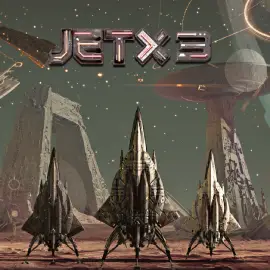
JetX3 is a crash game from SmartSoft Gaming in which three jets take off together, each with its own independent crash point. Players can bet on one, two or all three jets, collect from each separately and reach up to 2,000x per jet.