Author Spencer Thorne
October 29, 2026

The Moneyplane you open at one casino is not necessarily the same Moneyplane you open at another. Hacksaw Gaming publishes the game in five RTP configurations, 98%, 97%, 96%, 94% and 92%, and the operator decides which one goes live. The plane, the controls and the 10,000x ceiling look identical in every version, yet the house edge at the bottom of that range is four times the edge at the top. The build reviewed here states 97% in its rules panel, and nothing on the main game screen tells a player which version they are playing, so the rules panel is the first thing worth opening.
| Detail | Information |
|---|---|
| Developer / provider | Hacksaw Gaming |
| Game type | Crash (Hacksaw’s Bail2Win format) |
| RTP | 97% in the reviewed build (source: in-game rules); published versions 98%, 97%, 96%, 94%, 92% (source: Hacksaw Gaming game page) |
| House edge | 3% in the reviewed build; 2% to 8% depending on the operator’s configuration |
| Max multiplier | 10,000x |
| Min stake | $0.10 |
| Max stake | $10,000 |
| Risk level settings | No |
| Provably fair | Not documented |
| Auto-cashout | Yes |
| Demo available | Yes |
| Mobile compatible | Yes |
Moneyplane, also searched as Money Plane, is a standard multiplayer plane crash game. Before each round, players place one or more bets. When the round starts, a paper plane takes off and a multiplier climbs from 1x. A player who cashes out while the plane is still flying is paid their stake multiplied by the figure on screen at that moment. If the plane crashes first, every bet still open in that round is lost. All players in the lobby watch the same flight, so the crash point is shared rather than generated separately for each person.
Hacksaw Gaming, the Stockholm studio founded in 2018 and best known for slots, scratchcards and instant win games, announced Moneyplane on 7 September 2026 as its first crash title, and its game page lists a release date of 24 September 2026. Bail2Win is the name Hacksaw gives to the format. Mechanically, Bail2Win is the familiar bet, climb and cash out loop seen in Aviator; the name is branding rather than a new rule set.

Each round opens with a countdown timer. During the countdown a player can place bets, cancel bets that are still pending, or stop an active Autoplay. When the countdown ends the plane takes off and betting on that round closes. Bets for the following round can be placed during the flight on any bet panel that does not already hold a bet.
The screen shows up to three bet panels. Each panel holds one bet. The multiplier starts at 1x and rises continuously while the plane is in the air. Pressing CASH OUT on a panel settles that panel only, at the multiplier displayed at that moment, and the payout is rounded to two decimal places. The other panels stay in the round until they are cashed out or the plane crashes.
The crash point is set by the game’s random number generator, and Hacksaw’s general terms state that the visual representation has no bearing on the probabilities. The rules do not say whether the crash point is drawn before take-off or at the moment of the crash. The crash is communicated by the plane going down and the round ending, and the final multiplier is added to the results bar at the top of the screen.
Auto Cash Out is set per panel by toggling it on and entering a target multiplier; the build we reviewed defaulted to 1.25x. When the multiplier reaches that target, the bet is cashed out automatically. Autoplay is a separate function on the Auto tab that places the same bet every round. The rules are explicit that Autoplay does not cash out by itself, so a player who runs Autoplay without also setting Auto Cash Out, and then looks away, will lose every bet in that sequence. Advanced Autoplay settings add a number of rounds, a total session loss limit and a single win limit, and the sequence stops when any of them is exceeded.
Moneyplane has no risk level settings. The only levers a player controls are the stake, the cash-out target and how many of the three panels are in use.
The rules panel of the reviewed build states an RTP of 97%, calculated from a theoretical probability model and verified by running 10,000,000,000 simulations. At 97%, the house retains approximately $3 of every $100 wagered over a large number of rounds. Across the five published configurations the edge ranges from $2 per $100 at 98% to $8 per $100 at 92%.
The rules add that the RTP varies only slightly with the bet level and the chosen cash-out multiplier. If the return is close to 97% whatever target a player picks, the chance of the plane reaching a given multiplier must be roughly 0.97 divided by that multiplier. On that basis, a 1.25x target is reached in about 77.6% of rounds, 2x in about 48.5%, 10x in about 9.7% and 100x in about 0.97%. The 10,000x maximum works out to roughly one round in 10,300. Hacksaw does not publish a crash distribution, so these figures are derived from the stated RTP rather than taken from a developer table, but they follow directly from it.

Expected loss per hour is the house edge multiplied by rounds per hour and the average stake per round. We assume 60 rounds per hour with one active panel, since round length depends on how high each flight goes and how long the countdown runs. At a $1 stake, a player wagers $60 an hour, so the expected loss is $1.80 at 97%, $1.20 at 98% and $4.80 at 92%. At a $10 stake, $600 is wagered per hour and the expected loss is $18 at 97%, $12 at 98% and $48 at 92%. Using all three panels triples the amount wagered and therefore triples each of these figures.
A player targeting 1.25x wins about three rounds in four, gaining $0.25 per $1 staked on each win and losing the full $1 on each loss, so long winning runs are normal and so is a single crash wiping out several of them. A player targeting 10x loses roughly nine rounds in ten, and one hit can put the session well ahead. Both players can finish an hour up or down by far more than the expected loss, but the 3% applies to every dollar either of them stakes. Splitting stakes across panels, for example one bet at 1.5x and another at 5x, smooths the swings without changing the edge on the total wagered.
Neither the in-game rules nor Hacksaw’s game page mentions provably fair verification, server seeds, client seeds, hash functions or any player-side checking tool. Moneyplane’s provably fair status is therefore not documented, and players should assume it does not offer one.
In a provably fair crash game, the operator publishes a hash of a secret server seed before a round. The round result is then derived from that server seed combined with a client seed, typically with a hash function such as HMAC-SHA256, and once the seed is revealed any player can rerun the calculation and confirm the crash point was fixed in advance. Its History screen shows completed rounds and the results bar shows recent crash multipliers, which tell a player what happened but not whether it was predetermined fairly.
What Moneyplane relies on instead is the regulated-supplier model. Hacksaw’s operating entity lists licences from the Malta Gaming Authority, the UK Gambling Commission and several other regulators, and in those frameworks the RNG and RTP are tested and certified before release. That is a meaningful safeguard, but it is trust in third parties. A player cannot check any individual round, and Hacksaw’s game page does not name a specific test laboratory certificate for this title.
The RTP disclosure is better than many crash games manage. The rules panel gives a precise figure, explains that it comes from a theoretical model, states the number of simulations used to confirm it, and admits that rounding to two decimals and the chosen cash-out point cause small variations.
The control set is practical. Three independent panels let a player combine a low and a high target in the same round, each panel has its own Auto Cash Out, and the Advanced Autoplay session loss limit is a genuine bankroll tool that stops play automatically rather than relying on willpower mid-session. The $0.10 minimum stake keeps the per-round cost low for players who want to learn the game with real money.
The five-way RTP split is the most important weakness. A player at a casino running the 92% version loses, on average, four times as much per dollar as a player at a 98% casino, while seeing exactly the same game.
The absence of provably fair verification will matter most to players coming from crypto crash games, where seed verification is standard. Beyond that, the feature set is thin. There are no risk levels, no alternative modes and nothing in the Bail2Win format that changes the underlying crash mechanic. The rules sections we reviewed do not describe what happens to an open bet if a player’s connection drops mid-flight, and the in-game chat is unmoderated, with Hacksaw stating it takes no responsibility for its use.
Player feedback is not yet available in any useful volume. At the time of writing, roughly five weeks after release, we found no substantial discussion of Moneyplane on Reddit, Bitcointalk or similar forums.
The player who will get the most from Moneyplane already understands crash games, plays at a licensed casino that runs the 97% or 98% configuration, and wants a clean interface with a low minimum stake. They set a fixed stake, pick an Auto Cash Out target before the session, and use the Advanced Autoplay loss limit so the game stops itself.
The player who should consider an alternative is one who wants to verify results independently. If checking a server seed hash against a round result matters to you, Moneyplane cannot provide it, and a crash game with a documented seed-commitment scheme will serve you better, and our ranked list of crash games and mini-games is a good place to compare options.
The player who should avoid Moneyplane entirely is one who tends to raise stakes or add bets after losses. Short rounds, bets that can be queued during a flight and three simultaneous panels make it easy to triple the amount wagered per hour without noticing, and Autoplay without Auto Cash Out can lose a whole sequence of bets unattended.
Crash games are designed for fast play, and Moneyplane rounds are short enough that losses can build up much more quickly than at slower casino formats. Auto Cash Out at a fixed multiplier helps with discipline, but it does not change the house edge on any bet. Decide on a loss limit before you start, not after a losing streak. It is important to your finances to be a responsible gambler. If gambling is causing problems, support is available from GambleAware (begambleaware.org), GamCare in the UK (gamcare.org.uk), the National Council on Problem Gambling in the US (ncpgambling.org, 1-800-522-4700) and Gambling Therapy internationally (gamblingtherapy.org). 18+ only.
Moneyplane is a competent, plainly designed first crash game from Hacksaw that does nothing new mechanically but handles the basics well. The strongest reason to play it is the combination of a clearly documented RTP, three bet panels and a built-in session loss limit. The most important reason to be cautious is that the casino chooses the RTP, and the 92% version costs four times as much per dollar as the 98% version while looking identical. It suits experienced crash players at casinos running the 97% or 98% build who are comfortable trusting a regulated supplier rather than verifying rounds themselves. Our recommendation is worth playing with caveats: check the rules panel for the RTP first, always pair Autoplay with Auto Cash Out, and look elsewhere if provably fair verification matters to you.
One detail most coverage leaves out is in Hacksaw’s own rules: the RTP varies slightly with the bet level and cash-out multiplier because every win is rounded to two decimal places. At the $0.10 minimum stake, a 1.25x cash-out produces $0.125, which has to be rounded, so the effective return on very small bets at low targets can differ from the headline figure.
Moneyplane is published with five RTP configurations: 98%, 97%, 96%, 94% and 92%. The casino chooses which one to offer, and the build reviewed here states 97% in its in-game rules, so check the rules panel at your casino to see which version you are playing.
Moneyplane does not document any provably fair system. Neither the rules nor Hacksaw’s game page mentions server seeds, client seeds or a verification tool, so fairness rests on Hacksaw’s licensing and the certification of its RNG by regulators and test labs.
The Moneyplane max win is 10,000x the stake. At the $10,000 maximum stake that is a theoretical $100,000,000, and the rules panel shows no lower currency cap, though individual casinos can apply their own maximum payout terms.
Players place up to three bets during a countdown, then a paper plane takes off and a multiplier rises from 1x. Each bet must be cashed out manually or through Auto Cash Out before the plane crashes; any bet still open at the crash is lost.
The house edge is 3% in the 97% configuration, meaning about $3 of every $100 wagered is retained over the long run. Depending on the casino’s chosen version, it ranges from 2% at 98% RTP to 8% at 92% RTP.
There is no evidence that Moneyplane is rigged. It comes from a supplier licensed by the Malta Gaming Authority and the UK Gambling Commission, among others, but without provably fair verification players cannot check individual rounds themselves and are relying on that regulatory oversight.
Yes, a free demo is available through the “Try it” option on Hacksaw Gaming’s Moneyplane game page. The demo uses the same mechanics as the real-money version, but it does not show which RTP configuration a given casino runs.
Yes, Moneyplane is Hacksaw Gaming’s first crash game. Hacksaw announced it on 7 September 2026 and lists a release date of 24 September 2026, and it is the first title built on the studio’s Bail2Win format.
Yes, Moneyplane allows up to three bets per round, one on each bet panel. Each panel is cashed out separately, so one bet can take a low multiplier while another stays in the round, but the 3% house edge in the 97% build applies to every bet.
Other plane crash games include Aviator, Aviatrix and Avia Fly 2, each with its own RTP and fairness setup. More titles are covered in our casino mini-game reviews.
Moneyplane is available at online casinos that carry Hacksaw Gaming games. Our guide to the best casinos for crash games is a starting point, but check the RTP in the Moneyplane rules panel at whichever casino you choose, since it can be anywhere from 92% to 98%.

Chicken Halloween is BGaming's October 2026 seasonal reskin of Chicken Shot, a casual instant-win game where every shot at a costumed chicken is a separate wager with a published win chance and a fixed multiplier from x1.1 to x64.

High Flyer is a multiplayer plane crash game from Pragmatic Play, released in September 2024, in which players cash out before the aircraft flies away. It publishes a 97% RTP, offers two independent bet spots with auto-cashout and advertises multipliers of up to 1,000,000x.

Space XY is a multiplayer crash game from BGaming in which a rocket climbs across an X-Y graph and players cash out before it explodes. It has a published 97% RTP, two bet panels per round and a €250,000 win cap.
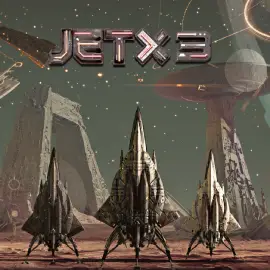
JetX3 is a crash game from SmartSoft Gaming in which three jets take off together, each with its own independent crash point. Players can bet on one, two or all three jets, collect from each separately and reach up to 2,000x per jet.