Author Spencer Thorne
July 23, 2026

Kalamba Games does not list Balloon Odyssey Crash on its own public game portfolio, and it has never published a return to player figure for it. What circulates instead are two different numbers taken from two different places. Databases such as SlotCatalog and SlotsTemple report 94 percent. Operator lobbies such as Wolfbet and Tower.bet display 96 percent. Those are not rounding variations of the same number. They describe a house edge of 6 percent and one of 4 percent, and the first costs a player half as much again per hour as the second. Almost every review picks one figure, states it as fact, and moves on.
| Detail | Information |
|---|---|
| Developer / provider | Kalamba Games (Malta, MGA/B2B/861/2020; studio in Kraków) |
| Game type | Single player crash |
| RTP | Not disclosed by the developer. Third party figures conflict: 94% (SlotCatalog, SlotsTemple, Respinix, citing the in game rules screen) and 96% (Wolfbet, Tower.bet operator lobbies) |
| House edge | Not disclosed by the developer. Implied 4% to 6% depending on which figure applies |
| Max multiplier | 10,000x (stated in the in game rules reproduced by operator help pages) |
| Min stake | Operator configured. Reported examples include roughly 0.10 in major currencies |
| Max stake | Operator configured. Reported examples range from about 4 to 100 per round |
| Risk level settings | No |
| Provably fair | Not documented. No seed or hash verification is published by Kalamba |
| Auto-cashout | Yes |
| Demo available | Yes |
| Mobile compatible | Yes |
Balloon Odyssey Crash is a crash game released by Kalamba Games in March 2025. Kalamba is a Malta registered studio with a development office in Kraków, licensed by the Malta Gaming Authority. Its catalogue is otherwise almost entirely video slots.
It belongs to the crash family rather than the slot family, a distinction affiliate databases frequently get wrong. There are no reels, symbols, paylines, wilds or free spins. A round consists of a single decision. The player stakes an amount, a hot air balloon begins to rise, a multiplier starts at 1x and climbs, and the player presses cash out at a moment of their choosing. If the cash out lands before the game triggers its crash event, the stake is returned multiplied by whatever figure was on screen. If the crash comes first, the stake is lost in full.

The operative detail, confirmed by the game rules that operators reproduce in their help centres, is that this is a single player game. In shared crash titles such as Aviator, one round runs for every player in the lobby at once. Here the round belongs to the individual. The rules state that if a player loses their connection mid round, the round pauses and can be resumed by pressing continue when they return. A shared round could not behave that way. The outcome of each round is generated for that player alone.
The crash point is determined by the random number generator when the round begins, before the balloon has visibly moved. Nothing the player does during the ascent changes it, and the rising multiplier on screen is an animation of a value already set. The rules note explicitly that cash out is subject to delays caused by the player’s own connection, so a late click can land after the crash has resolved.
Speed is adjustable in the settings menu, and this is the game’s one genuine point of difference from the crash titles it sits alongside. Auto cash out is also available, letting the player nominate a multiplier at which the game settles automatically. Auto cash out removes the reaction time problem entirely, but it does not remove the risk that the crash point falls below the chosen figure, which is the only risk that actually matters. There are no risk level settings and no alternative bet types. Every round is the same round.
One rule that reviews almost never mention changes how small stakes behave. The published rules state that the cash out prize is rounded down to the nearest whole currency unit, unless the game randomly determines to round up, with the probability of rounding up set so that the average prize equals the exact unrounded value. The expectation is preserved, so this is not a hidden edge. But at a 1.00 stake, a cash out at 1.50x does not pay 1.50. It pays either 1.00 or 2.00. Low multiplier grinding, the strategy most cautious crash players default to, is therefore far lumpier at small stakes than the displayed multiplier suggests.
Because Kalamba publishes nothing, the house edge cannot be confirmed. Both candidate figures can be priced. If the return to player is 94 percent, the house retains approximately 6.00 dollars of every 100 dollars wagered across a large number of rounds. If it is 96 percent, the house retains approximately 4.00 dollars per 100 dollars wagered.
Expected loss per hour equals house edge multiplied by rounds per hour multiplied by average stake. Assume 80 rounds per hour, which reflects a single player game with no shared lobby timer, played at default speed with a few seconds of hesitation between rounds. At a 1 dollar stake, that is 80 dollars wagered per hour, giving an expected loss of 4.80 dollars at a 6 percent edge or 3.20 dollars at a 4 percent edge. At a 5 dollar stake, 400 dollars passes through the game per hour, and the expected cost is 24.00 dollars or 16.00 dollars on the same two assumptions. The arithmetic scales with the speed setting: at 120 rounds per hour and a 5 dollar stake, the expected hourly cost at a 6 percent edge is 36.00 dollars. The speed control does not change the return to player. It changes how many times per hour that percentage is applied to the money.
Volatility is why this rarely feels like the description above. A player cashing out at 2x wins roughly half the time and can string together six or eight winning rounds without anything unusual happening. The house edge is a long run average that becomes visible over tens of thousands of rounds, not over an evening, which is precisely why short term results tell a player nothing about whether the underlying maths favours them. It does not.
Balloon Odyssey Crash is not provably fair, and no verification mechanism has ever been documented for it. Some affiliate pages claim otherwise, asserting cryptographic seed verification. Those claims name no hash function, no seed structure and no verification procedure, and Kalamba publishes no fairness documentation for this game or any other.
A genuine provably fair implementation commits the operator to an outcome before the bet. The server generates a secret seed, publishes a hash of it, accepts a client seed from the player, and derives the crash point from both. After the round the server reveals the original seed, and the player hashes it to confirm it matches the published commitment, then recomputes the crash point themselves and checks it against what they saw. None of those steps exist here: no seed to inspect, no hash published before the round, nothing to recompute afterwards.
What exists instead is regulatory certification. Kalamba operates under a Malta Gaming Authority supplier licence and holds certification in the United Kingdom and Romania, which means its random number generator has been tested by accredited laboratories and its games audited against the return to player they were submitted with. That is a real control, but it is a different thing. Certification means an auditor checked. Provably fair means the player can check. A player here relies on the regulator and the studio, not on their own verification.
The speed control is a real design decision, and it addresses a problem shared crash games cannot solve. Making the round single player allows Kalamba to hand pace control to the individual, and the pause and resume behaviour on disconnection follows from the same architecture.
The rules documentation is unusually complete for the format. The in game rules screen covers the crash trigger, the cash out calculation, connection handling and the rounding behaviour in plain language, and the fact that the randomised rounding rule is disclosed at all is more transparency than most crash titles offer about their settlement mechanics. Bet history is available in the settings menu.
The provider is a genuine strength. Kalamba is a licensed supplier in regulated European markets, which places this title in a different category from crash clones from studios with no verifiable regulatory footprint.
The disclosure failure is serious. A developer that publishes return to player figures across its slot catalogue has published nothing for this one. The 94 percent figure at least traces to something concrete, since reviewers who reached the in game rules screen report a stated theoretical payout of 94 percent. The 96 percent figure appears in operator lobbies with no stated origin. The likeliest explanation is that Kalamba supplies configurable return to player settings and different operators run different builds, which would mean the figure depends on where you play. Kalamba has not said so, and until it does, nobody can tell a player what this game costs.
The absence of fairness verification compounds it. Regulation covers that gap in licensed markets, but this game is widely distributed through crypto casinos where players verify rounds themselves and regulatory recourse is thin.
The feature set is thin even by crash standards. There are no risk settings, no dual bet option and no social layer. The 10,000x ceiling is also less meaningful than it looks, because operators impose their own maximum win per round on top of it. There is also, after more than a year in market, no meaningful player community discussion of this game anywhere. SlotCatalog’s own page carries no user comments at all, which is itself a finding.
The player best served here is someone who already enjoys crash mechanics, plays on an unreliable connection, and wants pace control without a shared lobby dictating the rhythm. They will set the speed low, use auto cash out at a modest multiplier, treat a fixed amount as the cost of the session. That player gets something from this title they cannot get from Aviator.
The player who should look elsewhere is anyone who chooses games on published numbers. If comparing return to player before playing is part of how you approach this, an undisclosed figure with two conflicting third party values is disqualifying, and other crash titles publish a single verifiable figure. The same applies to anyone wanting adjustable risk profiles: this game has one mode.
The player who should avoid it entirely is the crypto casino player who verifies rounds. If checking a server seed hash against a revealed seed is part of your routine, this game will not let you do it. Anyone who chases losses by increasing stake should also stay away, because a format that resolves in seconds gives the impulse nothing to push against.
Crash games are built for speed, and speed is what makes them costly. A round here resolves in seconds, which means a player can put more money through this game in an hour than through several hours of slot play. Auto cash out at a fixed multiplier is a genuine discipline tool because it removes the impulse decision, but it changes nothing about the underlying house edge. Decide a loss limit before the first round rather than during a losing run, when the decision will be made by the losing run rather than by you. Support is available through GambleAware at begambleaware.org, GamCare at gamcare.org.uk in the United Kingdom, the National Council on Problem Gambling at ncpgambling.org or 1-800-522-4700 in the United States, and Gambling Therapy at gamblingtherapy.org internationally. 18+ only.
Balloon Odyssey Crash is a competently built crash game from a legitimate licensed studio that has been let down by its own developer’s refusal to publish its numbers. The strongest reason to play it is the single player architecture, which gives real pace control and protects the stake when a connection drops, which shared lobby titles cannot offer. The strongest reason for caution is that nobody outside Kalamba can tell you whether it costs 4 percent or 6 percent of everything you wager. It suits the crash regular on a poor connection who plays small and slow, and nobody else in particular. Worth playing with a specific caveat: play the demo, and if you play for money, treat the edge as 6 percent when budgeting, because that is the figure with an actual documented source behind it. The fact nearly every other review omits is the rounding rule, under which a 1.00 stake cashed out at 1.50x pays either 1.00 or 2.00 and never 1.50, which makes the low multiplier grind most cautious players rely on considerably less predictable than the screen suggests.
Kalamba Games has not publicly disclosed it. Third party sources conflict: SlotCatalog, SlotsTemple and Respinix report 94 percent, with Respinix attributing that figure to the in game rules screen, while operator lobbies including Wolfbet and Tower.bet display 96 percent. No first party confirmation of either figure exists.
No. There is no published provably fair implementation, no server seed or client seed system and no hash to verify against. Affiliate pages claiming cryptographic verification provide no mechanism to support the claim. Fairness rests on Kalamba’s Malta Gaming Authority licence and laboratory certification of its random number generator, which is auditor verification rather than player verification.
The maximum multiplier is 10,000x the stake, stated in the game rules reproduced by operator help pages. Individual operators apply their own maximum win per round on top of that, so the effective ceiling is often lower than the multiplier implies.
A player places a stake, a balloon rises and a multiplier climbs from 1x, and the player presses cash out before the game triggers its crash event. The crash point is set by the random number generator when the round begins and cannot be influenced during play. Cashing out in time pays the stake times the displayed multiplier; failing to do so loses the stake.
It has not been disclosed. If the 94 percent figure is correct the house edge is 6 percent, meaning roughly 6.00 dollars retained per 100 dollars wagered over a large number of rounds. If the 96 percent figure applies, it is 4 percent.
There is no evidence of it. Kalamba operates under a Malta Gaming Authority business to business licence with certification in the United Kingdom and Romania, which requires accredited laboratory testing of its random number generator and auditing against submitted return to player. What players cannot do is verify individual rounds themselves, so the assurance is regulatory rather than cryptographic.

Chicken Halloween is BGaming's October 2026 seasonal reskin of Chicken Shot, a casual instant-win game where every shot at a costumed chicken is a separate wager with a published win chance and a fixed multiplier from x1.1 to x64.

High Flyer is a multiplayer plane crash game from Pragmatic Play, released in September 2024, in which players cash out before the aircraft flies away. It publishes a 97% RTP, offers two independent bet spots with auto-cashout and advertises multipliers of up to 1,000,000x.

Space XY is a multiplayer crash game from BGaming in which a rocket climbs across an X-Y graph and players cash out before it explodes. It has a published 97% RTP, two bet panels per round and a €250,000 win cap.
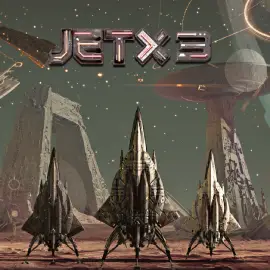
JetX3 is a crash game from SmartSoft Gaming in which three jets take off together, each with its own independent crash point. Players can bet on one, two or all three jets, collect from each separately and reach up to 2,000x per jet.