Author Spencer Thorne
August 18, 2026

The most widely repeated claim about Space Taxi is that it pays up to 10,000 times your stake. It does not, at least not in the way that figure implies. Lambda Gaming’s product listing states a maximum win of $10,000 in cash, not a 10,000x multiplier, and the specification sheet caps stakes at $100 per bet panel. Divide one by the other and the real ceiling at maximum stake is 100x. The advertised 10,000x holds only at a stake of exactly $1, which is presumably why SlotCatalog’s own entry lists the maximum as x100. That slip runs through most of the published coverage of this game, a fair warning about how much of it was copied rather than checked.
| Detail | Information |
|---|---|
| Developer / provider | Lambda Gaming (Tbilisi, Georgia) |
| Game type | Crash, with a random bonus multiplier round |
| RTP | Operator configurable. Lambda does not publish a fixed figure. SlotCatalog and CrashGambling.guru both report an in game figure of 95% to 96% |
| House edge | 4% to 5% if the reported 95% to 96% range is accurate. Not confirmed by the developer |
| Max multiplier | No published multiplier cap. Cash win capped at $10,000 per round on the developer listing |
| Min stake | $0.10 |
| Max stake | $100 per bet panel, $200 per round using both panels. Operator configurable |
| Risk level settings | No |
| Provably fair | Not documented by the developer |
| Auto-cashout | Yes |
| Demo available | Yes |
| Mobile compatible | Yes |
Space Taxi is a crash game. A round begins with a rocket on a launch pad and a coefficient displayed at 1.00. The coefficient climbs until the rocket explodes at a point the server has already determined. If you press cashout before that moment, your stake is multiplied by the coefficient shown. If you do not, the stake is lost in full, with no partial return and no consolation payout.
The game was built by Lambda Gaming, a business to business supplier based in Tbilisi, Georgia, with a small catalogue and distribution concentrated in the CIS region. Lambda’s specification sheet gives a release date of 14 February 2023. SlotCatalog reported that the studio holds an Isle of Man certificate but could not trace audit seals from any independent testing laboratory, and its scan of 65 markets found the game available in 21 countries.
Bets are accepted during a betting window before launch, and Space Taxi allows two independent bets in the same round, each with its own stake and its own cashout. When the window closes the rocket launches and the coefficient begins rising from 1.00. The crash point is not calculated as the rocket flies: it is generated by the server’s random number generator at the start of the round, and the ascending rocket is a visualisation of a result that already exists.
Cashing out is the only decision. Automatic cashout lets you nominate a coefficient in advance so the system settles for you when the rocket reaches it, removing reaction time from the equation. Its limitation is worth stating plainly: auto cashout protects you from being slow, not from being wrong. If the crash point falls below your nominated coefficient it does nothing at all, and the stake is lost exactly as it would have been manually. An automatic bet function repeats your stake each round and can be bounded by a round count and by win or loss limits.
The feature that distinguishes Space Taxi from a plain crash game is the bonus round, which Lambda markets as the first of its kind. It can trigger at any point between launch and explosion. Instead of exploding, the rocket disintegrates and a capsule descends towards a nearby planet, where a bonus coefficient reported between x2 and x100 is revealed and applied to every bet still active in the round. The trigger is random rather than earned, and there are no risk level settings anywhere in the game, so a player has no lever to adjust bonus frequency, volatility or bust probability.
Lambda states that the RTP is configurable, which means the operator chooses the build. That is the most important number in this review, and the developer does not publish one. SlotCatalog and CrashGambling.guru both report a figure of 95% to 96% shown inside the game itself. Taking that at face value, if the RTP is 95% the house retains approximately $5 of every $100 wagered over a large number of rounds, and at 96% it retains approximately $4. Neither figure is confirmed on Lambda’s public pages.
Expected loss per hour is house edge multiplied by rounds per hour multiplied by average stake. Assume 60 rounds per hour, realistic for a crash cycle of roughly 30 seconds including the betting window. At a $1 stake on one panel, a 5% edge produces an expected loss of $3.00 per hour and a 4% edge produces $2.40. At a $10 stake the same assumptions produce $30.00 and $24.00. Using both bet panels doubles turnover and therefore doubles those figures, so a player running $10 on each panel faces an expected cost of $48 to $60 per hour. Because the RTP is configurable, every percentage point an operator removes costs a further 1% of turnover, which is $0.60 per hour at $1 stakes and $6.00 per hour at $10 stakes.
Volatility is why those numbers feel abstract during a session. Crash payouts are heavily skewed, so most rounds return nothing while occasional high coefficients carry the distribution. A player cashing out at 1.5x wins often and grinds slowly; one waiting for 20x rarely wins but recovers everything at once. Both face the same house edge, because the edge is a property of the payout structure rather than of the strategy applied to it. Over 60 rounds anything can happen, including a large profit. Over 6,000 rounds the arithmetic is very hard to escape.
The bonus round deserves attention here because it is almost universally described as free upside. It is not. Those x2 to x100 coefficients are paid out of the same RTP budget as everything else, so a game returning 95% to 96% overall must fund both the base crash distribution and the bonus multipliers from one pool. The base crash curve therefore has to be tuned less generously than a plain crash game at the same RTP. The bonus adds no expected value. It moves value out of ordinary rounds and concentrates it into rare ones, which raises variance. That is a legitimate design choice, but it is not a bonus in the sense the marketing implies.
Lambda Gaming does not document a provably fair implementation for Space Taxi. There is no published hash function, no server seed and client seed pairing and no verification page. Lambda’s own description of the mechanic says only that the crash point is determined by the generation of random numbers, which describes a server side RNG, not a verifiable one. CrashGambling.guru states explicitly that the game does not have provably fair technology integrated.
This matters because at least one affiliate site describes Space Taxi as running a full provably fair system, with seed hashing, monthly iTech Labs audits and GLI RNG certification. Nothing in Lambda’s public materials supports any part of that, and SlotCatalog’s provider review could not trace laboratory audit seals for the studio at all.
What the absence of provable fairness means in practice is straightforward. You cannot independently confirm that the crash point in a round you played was generated before your bet was placed rather than after. You are relying on the developer’s RNG implementation and the operator’s honesty. That is the same position as on a conventional slot, which many players accept. It is simply not verification.
The bonus round is a genuine design contribution to a format that has been almost entirely static since its origins. Space Taxi changes the shape of the outcome distribution, and the moment where an explosion resolves into a landing rather than a loss is a real mechanical event rather than cosmetic dressing.
The interface delivers the standard toolkit competently, and the win and loss limits on auto bet are the most practically useful part of it, because they are the only built in mechanism that will stop a session without a decision from the player. A demo mode lets a player observe the crash distribution and bonus trigger frequency without staking money, and the game runs properly on mobile browsers.
Disclosure is the central weakness. A configurable RTP with no published figure means the player cannot know what they are playing. The 95% to 96% range circulating online comes from third parties reading the in game information panel, and says nothing about the build a given operator has enabled. Lambda also publishes no volatility rating, no bonus trigger frequency and no bonus coefficient distribution, which makes the bonus round impossible to evaluate rather than merely difficult.
The maximum win presentation is the second problem. A $10,000 cash cap under a $100 stake ceiling means the effective multiplier ceiling scales inversely with your stake, and no promotional material explains this. The absence of risk level settings is a real limitation against competitors that let players choose their own volatility profile. Distribution is thin, and there is a related evidence gap: no substantive community feedback exists on Reddit, Bitcointalk or comparable forums, and SlotCatalog’s own game page carries no user comments. Almost every English language page about it is affiliate copy, so a player has no independent record of how the game behaves over a large sample.
The player who will get the most from Space Taxi is an experienced crash player who already understands the format, wants a variance profile that differs from the standard curve, and treats the bonus round as the reason to be here. They will play small stakes across many rounds, use the auto bet loss limit as a hard stop, and accept long runs of dead rounds in exchange for occasional bonus multiplied results.
The player who should look elsewhere is the one who cares about knowing their numbers. If you want a published fixed RTP, a documented volatility rating and a verification procedure you can run yourself, this game provides none of the three and several established crash titles publish seed and hash procedures a player can check by hand. Choosing one of those costs you the bonus round but gains you the ability to audit what you are playing.
The player who should avoid Space Taxi entirely is the one who chases losses by increasing stake. The interaction between the $10,000 cash cap and rising stakes is actively hostile to that behaviour: as the stake climbs the effective multiplier ceiling falls, so the recovery scenario a chasing player imagines shrinks precisely as they bet more to reach it, and two bet panels make doubling exposure easy to do without noticing.
Crash games are built for speed. Rounds resolve in well under a minute, and automatic betting can place several hundred wagers in an evening without a pause to count them, which is how losses accumulate faster here than in slower casino formats at comparable stakes. Automatic cashout can impose discipline on the decision, but it does not alter the house edge by a single basis point, and nor does any betting system. Set a loss limit before the first round rather than after a losing streak, and use the auto bet loss limit to enforce it. Support is available internationally through GambleAware at begambleaware.org, GamCare in the United Kingdom at gamcare.org.uk, the National Council on Problem Gambling in the United States at ncpgambling.org or 1-800-522-4700, and Gambling Therapy internationally at gamblingtherapy.org. 18+ only.
Space Taxi is a competently built crash game with one genuinely original mechanic attached to unusually poor disclosure. The strongest reason to play it is the bonus round, the only meaningful structural innovation the crash format has seen in years. The most important reason for caution is that you cannot establish what you are playing: the RTP is operator configurable with no published figure, there is no player side verification, and no independent laboratory audit trail for the studio could be traced. This game suits the experienced crash player who wants a different variance profile and will accept an unverifiable one. It is worth playing with those caveats and at small stakes, and not worth playing if published numbers and verifiable fairness are part of your criteria. The fact most reviews omit: the bonus round is funded from the same RTP as everything else, so the base crash curve must pay less than an equivalent game without a bonus, which means the feature redistributes value rather than adding any.
Lambda Gaming does not publish a fixed RTP for Space Taxi. The developer states the figure is configurable by the operator, which means different casinos may run different builds. SlotCatalog and CrashGambling.guru both report a figure of 95% to 96% displayed in the game’s own information panel, but this is not confirmed on Lambda’s public pages and should not be assumed to apply to any particular deployment.
No, not in any verifiable sense. Lambda Gaming does not publish a provably fair implementation for Space Taxi: there is no documented server seed, client seed, hash function or verification procedure. At least one affiliate site claims otherwise, but nothing in the developer’s materials supports that claim. Players rely on the developer’s RNG and the operator’s licensing rather than on cryptographic verification they can perform themselves.
Lambda’s product listing states a maximum win of $10,000 in cash per round. This is a cash cap rather than a multiplier cap, so the effective multiplier ceiling depends on your stake: at the $100 maximum stake it is 100x, at $1 it is 10,000x, and at the $0.10 minimum it is 100,000x. The widely repeated 10,000x figure applies only at a $1 stake.
You place a bet during the pre launch window, the rocket takes off and a coefficient rises from 1.00, and you must cash out before the rocket explodes to be paid your stake multiplied by the coefficient at that moment. The crash point is generated by the server before the round animates. Two bets can be placed per round, and a random bonus round can trigger in which the rocket lands rather than explodes and a coefficient reported between x2 and x100 is applied to all active bets.
If the reported 95% to 96% RTP range is accurate, the house edge is 4% to 5%. That means an expected loss of roughly $2.40 to $3.00 per hour at $1 stakes and $24 to $30 per hour at $10 stakes, assuming 60 rounds per hour on a single bet panel. Using both panels doubles those figures. Because the RTP is configurable, the actual edge at a given casino may be higher than 5%.
There is no evidence that it is, and equally no way for a player to prove that it is not. The game has no provably fair verification, so outcomes cannot be independently checked. Lambda Gaming reportedly holds an Isle of Man certificate, though SlotCatalog was unable to trace independent testing laboratory audit seals for the studio. The practical position is that fairness rests on the operator’s licence conditions and the developer’s RNG rather than on anything a player can verify.
No. Unlike some newer crash titles, Space Taxi offers no adjustable volatility or risk profile. The only controls are stake size, the number of bet panels used, and the auto cashout coefficient. Bonus round frequency and coefficient size are not player adjustable and are not documented by the developer.
Yes. A demo version is available, which is a reasonable way to observe the crash distribution and how often the bonus round triggers before staking money. Bear in mind that a demo build may not use the same configured RTP as a real money deployment, so the demo tells you about the mechanic rather than about the return.

Chicken Halloween is BGaming's October 2026 seasonal reskin of Chicken Shot, a casual instant-win game where every shot at a costumed chicken is a separate wager with a published win chance and a fixed multiplier from x1.1 to x64.

High Flyer is a multiplayer plane crash game from Pragmatic Play, released in September 2024, in which players cash out before the aircraft flies away. It publishes a 97% RTP, offers two independent bet spots with auto-cashout and advertises multipliers of up to 1,000,000x.

Space XY is a multiplayer crash game from BGaming in which a rocket climbs across an X-Y graph and players cash out before it explodes. It has a published 97% RTP, two bet panels per round and a €250,000 win cap.
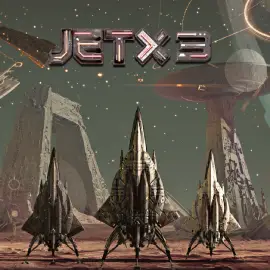
JetX3 is a crash game from SmartSoft Gaming in which three jets take off together, each with its own independent crash point. Players can bet on one, two or all three jets, collect from each separately and reach up to 2,000x per jet.